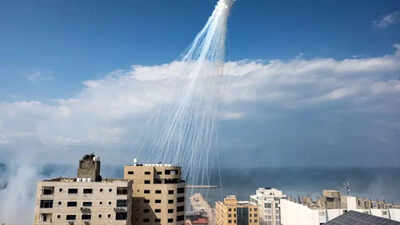
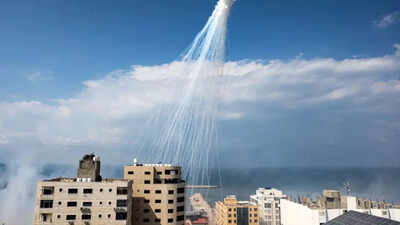
War headlines often focus on missiles, drones, or airstrikes. Yet some weapons spark a different kind of reaction. White phosphorus is one of them. It has been used by militaries for decades, but every time it appears in a conflict, debate quickly follows.Recently, the substance has returned to international discussion after human rights groups accused Israel of using white phosphorus in southern Lebanon during escalating regional tensions linked to Iran-backed forces. Human Rights Watch says it has verified images showing airburst munitions over residential areas. Israel has not confirmed the claims and says it cannot comment on the visuals cited in the report.The accusations have revived an old question that often confuses people. Is white phosphorus actually illegal, or is it a lawful military tool that becomes controversial only in certain situations?
Understanding white phosphorus: Know its properties
White phosphorus is a chemical substance that appears waxy and pale yellow or white. It also carries a distinctive smell that many people describe as similar to garlic. The unusual property of white phosphorus is how it reacts with air. When the chemical is exposed to oxygen, it can ignite almost immediately at temperatures above around 30°C. Once it begins burning, it produces thick white smoke and extremely intense heat.The burning chemical creates large smoke clouds that can block visibility on the battlefield. Armies sometimes use it to conceal troop movements, mark targets, or illuminate areas at night. These uses are technically permitted under international law. In many cases, white phosphorus is delivered through artillery shells that burst in the air and scatter burning fragments across an area. Those fragments are what make the weapon so controversial.
How and why white phosphorus can be so dangerous
White phosphorus is extremely hazardous to humans. When the burning chemical comes into contact with skin, it can cause severe chemical burns that penetrate deeply into tissue. Medical experts say the burning particles may continue to consume flesh until the chemical is fully burned out or deprived of oxygen. In some cases, fragments reportedly burn through muscle and reach the bone. The injuries are not only painful but also difficult to treat. Doctors must remove any remaining phosphorus fragments carefully because they can reignite when exposed to air during treatment.The smoke produced by burning phosphorus can also be harmful. Exposure may irritate the eyes, lungs, and skin. In serious cases, the chemical can be absorbed into the body through inhalation or through wounds. Researchers say high exposure can potentially damage organs such as the liver and heart, and severe poisoning may lead to shock or even death.
Is white phosphorus illegal under international law
The legal status of white phosphorus is complicated and often misunderstood. The chemical itself is not banned. Many countries possess and use white phosphorus munitions for battlefield purposes, especially for smoke generation and signalling, according to World Health Organization (WHO).International humanitarian law focuses less on the chemical and more on how it is used. Weapons cannot be used in ways that indiscriminately harm civilians. When white phosphorus is deployed in densely populated areas, especially through airburst shells that scatter burning particles over a wide space, legal experts often argue that it becomes unlawful. Human rights organisations say such use may violate the rules of war because it can create uncontrollable fires and injuries among civilians.
Human Rights Watch flags suspected white phosphorus use in Lebanon
Human Rights Watch says it has analysed several images showing what appears to be white phosphorus artillery bursts over the Lebanese town of Yohmor. According to the organisation, the smoke clouds in the footage match the distinctive pattern created by airburst phosphorus shells.Civil defence teams were reportedly seen responding to fires in homes and vehicles in the area shortly afterwards. The Israeli military has said it cannot confirm the claims at this stage. Officials say they have not reviewed the specific evidence referenced in the report. The military also noted that its smoke shells may contain small quantities of white phosphorus, which they say are intended for smoke screens rather than for causing fires. According to the Israeli Defence Forces, these shells are not normally used in densely populated areas.
About the Author